The Customs Font: A Luxurious Handwritten Choice for Professional Design
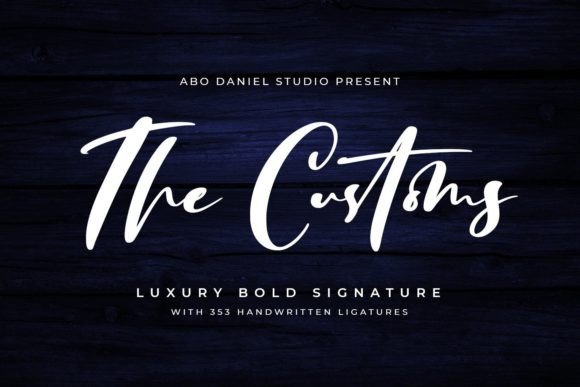
The Customs is a luxuriously bold handwritten font that offers a unique blend of elegance and strength. Designed to stand out, it provides a visually striking option for various design applications. Its style is reminiscent of traditional calligraphy but with a modern twist that makes it suitable for both classic and contemporary projects.
As a PUA encoded font, The Customs allows users to access all glyphs and swashes with ease, making it a versatile choice for designers who need flexibility in their typography. This feature is particularly useful when creating logos, branding materials, or any project that requires intricate details and customization options.
Why Consider The Customs for Your Projects
There are several reasons why someone might be interested in using The Customs. First, its bold and luxurious appearance can add a sense of sophistication to any design. Whether you're creating a logo for a high-end brand or designing a business card that needs to make an impression, this font can help convey a professional and elegant image.
Additionally, the PUA encoding ensures that users have full access to a wide range of characters and stylistic variations. This makes it ideal for projects that require special symbols or decorative elements, such as wedding invitations, promotional flyers, or custom t-shirt designs.
For those working on photography-related projects, The Customs can serve as an excellent watermark or caption font. Its distinctiveness helps ensure that text remains visible and aesthetically pleasing even when overlaid on images.
Benefits and Tradeoffs of Using The Customs
One of the main benefits of The Customs is its ability to elevate the visual appeal of any design. Its bold strokes and fluid curves create a sense of movement and personality that can be difficult to achieve with more standard fonts. This makes it particularly well-suited for branding efforts that aim to stand out in a crowded market.
However, there are also some tradeoffs to consider. Because of its distinctive style, The Customs may not be appropriate for every type of project. For example, it may not be the best choice for formal documents or websites that require a clean, minimalist look. Additionally, while the PUA encoding provides access to many glyphs, it does require some familiarity with character maps or specialized software to fully utilize all features.
Another consideration is legibility. While The Customs is designed to be visually appealing, its handwritten nature means that it may not be as easy to read at smaller sizes compared to more conventional sans-serif or serif fonts. This could be a drawback in situations where readability is a top priority, such as in body text for long-form content.
Situations Where The Customs Is a Strong Fit
The Customs shines in scenarios where a strong, memorable visual identity is crucial. It is especially effective for branding projects, including logos, packaging designs, and marketing collateral. Its boldness and elegance make it a great fit for luxury brands or businesses that want to convey exclusivity and refinement.
It is also well-suited for creative fields such as graphic design, illustration, and photography. In these contexts, The Customs can add a unique flair to titles, captions, and headings without overwhelming the overall composition.
For print-based materials like posters, flyers, and business cards, The Customs can provide a striking contrast against backgrounds and other design elements. Its versatility allows it to be used in both large-scale and small-scale applications, making it a valuable asset for designers working across multiple mediums.
When Alternatives May Be Worth Considering
While The Customs has many strengths, there are certain situations where alternative fonts may be more appropriate. If a project requires a clean, readable font for extended text passages, a more traditional serif or sans-serif font would likely be a better choice. Fonts like Helvetica, Times New Roman, or Arial offer greater legibility and are often preferred for body text in reports, articles, or web content.
For digital projects that prioritize accessibility, such as websites or mobile apps, it's important to choose fonts that are optimized for screen readability. In these cases, The Customs may not be the most practical option due to its stylized nature.
Designers should also consider the target audience when selecting a font. If the intended audience prefers a more conservative or professional aesthetic, a more subdued font may be preferable to The Customs' bold and ornate style.
Practical Insights for Choosing The Customs
When deciding whether The Customs is the right choice for your project, start by considering the overall tone and purpose of your design. Ask yourself if the font's bold and luxurious characteristics align with the message you want to convey. If the answer is yes, then The Customs could be an excellent addition to your toolkit.
Next, evaluate the technical requirements of your project. If you need access to a wide range of glyphs and swashes, The Customs' PUA encoding will be a significant advantage. However, if your workflow relies heavily on standard character sets, you may find that other fonts are more convenient to use.
Finally, test The Customs in different contexts before committing to it for a major project. See how it looks at various sizes, on different backgrounds, and alongside other design elements. This will help you determine whether it meets your expectations and complements your overall vision.
By carefully weighing these factors, you can make an informed decision about whether The Customs is the right font for your needs. Whether you're looking to create a bold new brand identity or add a touch of elegance to your next design, this font offers a compelling option that is worth exploring.